 Get new posts

Got a task that used to train your juniors? Let's talk about turning it into learning.
Contact usJoin the community for new pieces, the best of the discussion, and what is coming up.
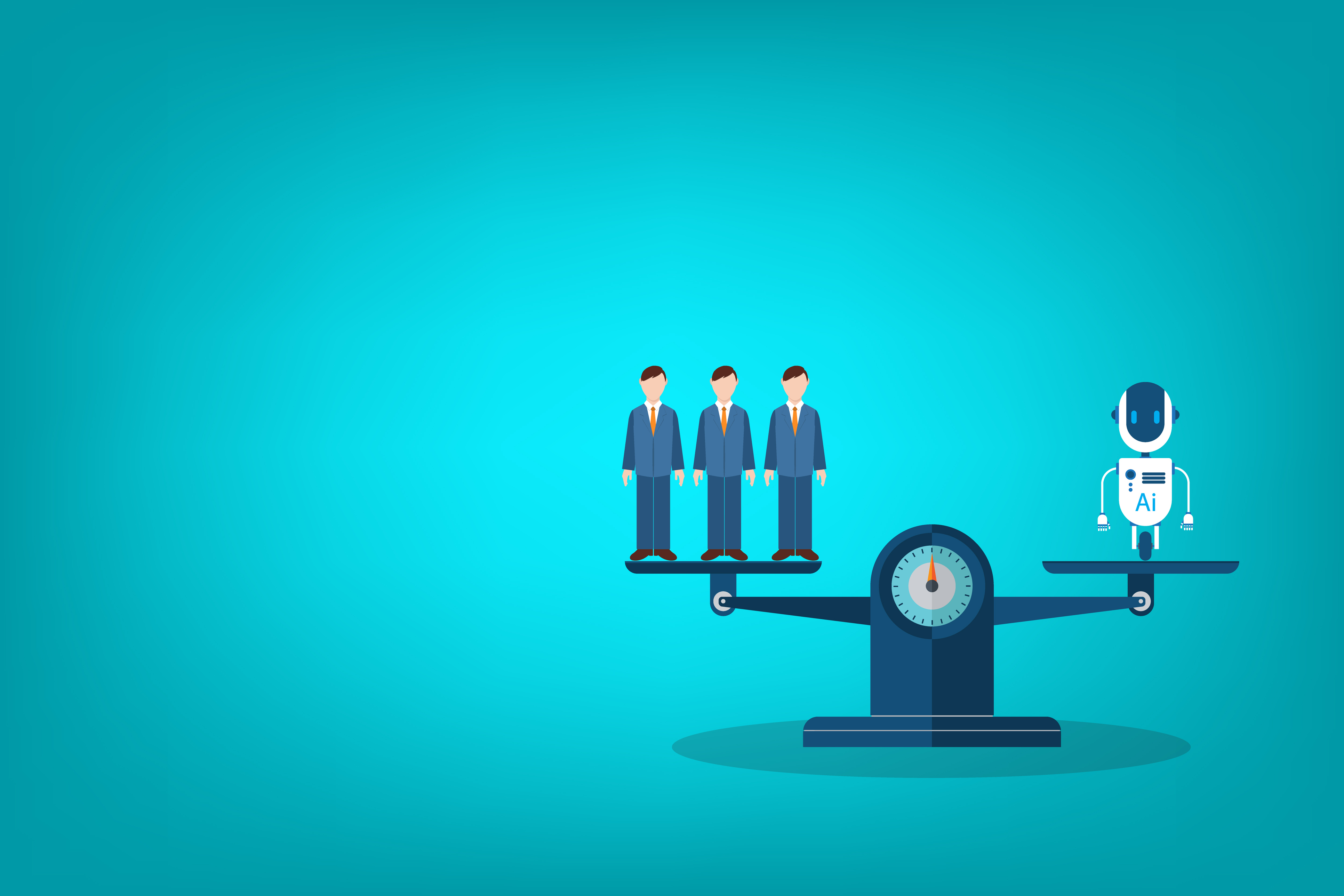
The tedious jobs juniors used to learn on are being solved by AI. But those jobs were how judgement got built. If the first rung is moving, the apprenticeship has to be rebuilt on purpose.

When I was a young architect, the first rung of the ladder looked like this: technical drawings, checking, window schedules, door schedules, and a lot of late nights coordinating everything with everything else. On bigger buildings that work was spread across bigger teams, but it was always the juniors holding it together. The all-nighters started at college and simply moved to the studio.
Nobody needs to do a window schedule by hand any more, and I doubt even the most experienced architect would do one better than an AI now. Plenty of older architects might feel a little cheated that the work they slogged through has simply been solved. But those schedules weren't only tedious. They were how you learned how a building actually goes together. That's what this post is about.
There's a familiar argument about AI and the professions. One side says the accountant, the solicitor and the analyst are finished. Richard and Daniel Susskind made the strongest version of that case in The Future of the Professions, predicting the decline of the professions as we've known them. The other side says nothing much will change.
We think both are asking the wrong question. A profession isn't one job. It's a bundle of tasks, held together by a standard and by someone being accountable for the result. The better question is which tasks are moving, in what order, and what's left when they've gone.
That matters to employers for a practical reason. The tasks moving first are the ones you've traditionally given to new joiners.
The professions aren't disappearing. They're being rewritten, one task at a time, and the rewriting starts at the junior end.
From what we see and hear, the tasks absorbed first share some features. They're done on a screen, in text, numbers or code. They have a clear specification. There are plenty of earlier examples to follow. And the result can be checked by someone who knows the field.
That describes a lot of early-career work. Producing a first draft. Summarising a long document. Searching for sources and collating them. Reconciling one set of figures against another. Reviewing a standard document against a checklist. Writing routine code and its tests. Turning notes into a formatted report.
What isn't being absorbed, at least so far, looks different. Deciding what the problem really is. Knowing which of several acceptable answers suits this client. Noticing that something is missing. Handling the conversation when the news is bad. Putting your name to the work and answering for it.
So a profession doesn't shrink evenly. Its centre of gravity moves, away from producing and towards specifying, checking and deciding.
I'll be honest about where this comes from. It's a view from the leading edge: our own hands-on experimenting with agents, the professional applied AI courses I've been on, people in businesses who are actually putting this to work, and a little from universities. That's a pattern I've seen, not a measurement.
How it travels matters too. The new skills are being worked out first outside the professions, where there are fewer constraints: by innovators and experimenters, AI educators, and the business transformation firms teaching enterprises how to use AI, mostly for personal productivity. Inside the professions, it's the innovators who pick it up first. They're the witnesses, watching all that knowledge being shared online and adapting it to the codes, liability and client trust their profession runs on. From them it spreads, project team by project team, through organisations and working cultures. It's a textbook case of Everett Rogers' Diffusion of Innovations: innovators first, then early adopters, then everyone else. It's still early, and still a small group. So read what follows as news from the frontier.
Others have started measuring parts of the same picture, and what they're finding points the same way.
The clearest comes from Stanford's Digital Economy Lab. Using US payroll data, Erik Brynjolfsson and colleagues found that since generative AI became widespread, employment of 22 to 25 year olds in the most AI-exposed occupations has fallen by 16% relative to other groups, while employment of more experienced workers in the same occupations has held steady or grown. The fall is concentrated where AI automates work rather than assists with it (Canaries in the Coal Mine?, November 2025).
UK employers expect the same direction of travel. In the Institute of Student Employers' 2026 survey, 87% said AI will reshape graduate and apprentice roles, and its effect on entry-level roles was their single biggest concern (Times Higher Education).
The UK hiring figures are less settled. Adzuna reported graduate vacancies down 45% year on year in January 2026, while ISE employer data showed a fall closer to 8%. How much of the squeeze is AI, and how much is cost and the wider economy, is genuinely disputed (techUK). I'd rather say so than pick the number that suits my argument.
Here's the bit that matters most. The tasks being absorbed were never only tasks. They were also how people learned.
A junior who spends their first months reviewing standard documents is being paid to be useful. They're also absorbing what normal looks like, which is what later lets them notice the clause that isn't normal. Take away the reviewing and you take away the way that judgement was built.
The same is true elsewhere. The trainee who reconciles accounts learns what a healthy set of figures looks like. The junior developer who writes routine tests learns how software fails.
None of this is a new idea. Jean Lave and Etienne Wenger called it legitimate peripheral participation: newcomers learn a practice by doing its simpler, peripheral parts alongside people who know more. Matt Beane's The Skill Code follows what happens when technology removes those parts, from robotic surgery to investment banking. Experts become more productive, and novices lose the work through which they used to learn. Architects are now saying the same about their own profession, as I set out in The ground is moving.
I used to sit at one end of that apprenticeship. As a professional studies adviser, I signed off students' records of their time in practice. I wasn't judging the practice. I was judging the student's record: had they had good, real exposure to professional work, and had they built knowledge the university could accredit? Yes, this is real. That signature only meant something because the routine work was doing its quiet teaching. If agents take the routine work, someone has to find another way to make that signature honest.
This is the part of the rewriting that nobody designed. Professions have long relied on an informal apprenticeship carried out through routine work. If the routine work goes to an agent, the apprenticeship has to be rebuilt on purpose. Otherwise a profession will find itself short of people who can check what the agents produce.
This is where curriculum design comes in, and it isn't only a matter for universities.
A curriculum aims at a picture of entry-level work. If the picture is out of date, graduates arrive ready for a job that has changed. Only employers can update it, because only they know what they now ask a new joiner to do in the first week.
That's also why the new first rung may not start inside the profession at all. If the skills are being worked out on the outside first, a graduate can learn them from the frontier, through courses, communities and their own experiments, and bring them in. The profession's job is then to help them translate it: to its codes, its clients and its sense of what good looks like. That's a different kind of apprenticeship, and it runs both ways. Juniors bring the tools, and seniors bring the judgement.
We think a curriculum for a rewritten profession needs four things.
It needs to teach specification: how to describe a piece of work clearly enough that an agent, or a colleague, can do it. That's harder than it sounds, and it's seldom taught directly.
I tried a version of this in 2009 with diploma students at UEL. Each had to capture their research on two sides of A4, in the same format, so anyone could pick it up and understand what the project was about. A ready reckoner, really: a bit like the context files we now write for AI agents, years before anyone had thought of them.
It needs to teach verification. Checking a plausible piece of work for errors is a skill in its own right, and it depends on knowing the subject properly. A Microsoft Research and Carnegie Mellon survey of 319 knowledge workers found that AI shifts critical thinking towards checking its output, and that people found that checking harder in areas where they lacked expertise (Lee et al., CHI 2025). The skill also fades without practice, even in experts. Endoscopists in Poland who'd grown used to an AI assistant found fewer precancerous growths when working without it, with their detection rate falling from 28% to 22% (Lancet Gastroenterology & Hepatology, 2025). So subject knowledge matters more, not less.
AI makes mistakes. So do people. The rule I'm working towards at ABC is two humans looking at our work, alongside many agents.
It needs to bring judgement forward. If graduates will supervise work from the start, they need supervised practice at exercising judgement before they arrive, on problems real enough to have consequences.
And it needs to be honest about accountability. Someone signs the work. Students should practise being that person.
None of this works without employers in the room. The real problems have to come from somewhere, and so does the feedback on whether a student's answer would survive contact with a client. That's a different kind of involvement from sitting on an advisory board. It means bringing live work, with the confidential parts removed, and spending time with the people attempting it.
A useful first step is small. Write down what a new joiner did in their first few months some years ago, and what one does now. Then share the difference with the people who teach your future recruits.
There's a second task for employers, closer to home.
If agents now do the work your juniors learned on, you need to decide how your juniors will learn. Left alone, the question answers itself badly. The routine work goes, the learning goes with it, and nobody notices until a more senior person leaves and there's no one ready to step up.
We expect organisations to split on this, and the split has already started. Some will rebuild the apprenticeship deliberately, with structured practice in checking and deciding, and with experienced people given time to explain their reasoning. IBM, for one, has said it's tripling its US entry-level hiring because of AI. Others will stop hiring at entry level because the routine work no longer needs doing. A techUK panel in May 2026 warned that firms restructuring away from entry-level roles now risk a serious shortage of experienced managers in five to ten years. We think the second group will meet the cost later.
I've felt this dilemma myself. Last year at Choirfarm, my AI business helping to grow the choir economy, I took on five graduates as paid summer interns to do user research and requirements work, all on the London Living Wage. They worked mostly without AI; I was using some. Watching what they did, and what it cost, I caught myself wondering whether I needed five, or two, or even one. It's a real dilemma, and I don't think any employer should pretend it isn't. What I could do was make sure every one of them who wanted it got help with the next step: their job-hunting strategy, their employability, and references for permanent work.
I know which side I'd choose. A rewritten profession still needs people. It needs them to be better prepared, sooner, and that's a shared job between the organisations that employ them and the universities that teach them.
This is the gap the University of Surrey's AI Innovation Accelerator is trying to close: finding new, scalable ways to bring education and practice closer together, with real organisations bringing real work to students. I'm working on it because it's the rebuilt apprenticeship this post is asking for.
So think about the work you gave a new joiner a few years ago, and the work you'd give one today. Which tasks have gone? And have you told the people who are teaching your next recruits?
If you've got a task that used to train your juniors, get in touch. It could be the start of a live challenge.