 Get new posts

Follow our Luma calendar for free online talks and briefings, and follow us on LinkedIn for news.
Follow on LumaJoin the community for new pieces, the best of the discussion, and what is coming up.
AI is rewriting the work we all trained for, and nobody was trained for what comes next. Why I started Agent Build Club, and how we plan to turn curiosity into capability, together.
Every one of us trained for a version of work that's now changing under our feet. The architect, the accountant, the engineer, the designer, the graduate about to start a first job. All of us learned a craft for a world in which AI didn't do any of the work.
That world is going. The World Economic Forum expects nearly 40% of the skills used at work to change by 2030, according to its Future of Jobs Report 2025. That doesn't mean work disappears. In many places AI will mean better work, not fewer people: less drudgery, and more time for the parts that need judgement. In others, particularly startups, it'll let a small team do what once needed a large one. Both are real, and both are arriving now.
Nobody trained for this future. Not the students, not their lecturers, and not the professionals who hire them. So the honest question isn't who already knows the answers. It's who's willing to learn them, and who they'll learn them with.
That's why Agent Build Club exists.
Agent Build Club is a co-learning community: universities, people in practice and the next generation of graduates, learning to build with AI together. What everyone shares is a constant curiosity about what AI can do and how to use it well.
We'll be honest about who that's for. Agent Build Club won't appeal to someone who doesn't care about AI, and that's fine. It's for the curious. If you've wondered what an AI agent could do in your work, or tried something and got stuck, or have an idea you suspect you could now build yourself, you'll fit right in. You don't need to be technical. For now, we're working with universities and the businesses around them, so most people will find us through their institution. Over time we want to open the door wider, to apprentices and others coming into work by routes other than university.
In that sense, everyone in Agent Build Club is an innovator. You're looking at how something is done now and finding a practical way to do it better. Sometimes that's a small improvement, sometimes it's completely disruptive. So Agent Build Club is a supportive, innovation-focused community for learning to work with AI in this new paradigm: to do it well, and to do it responsibly.
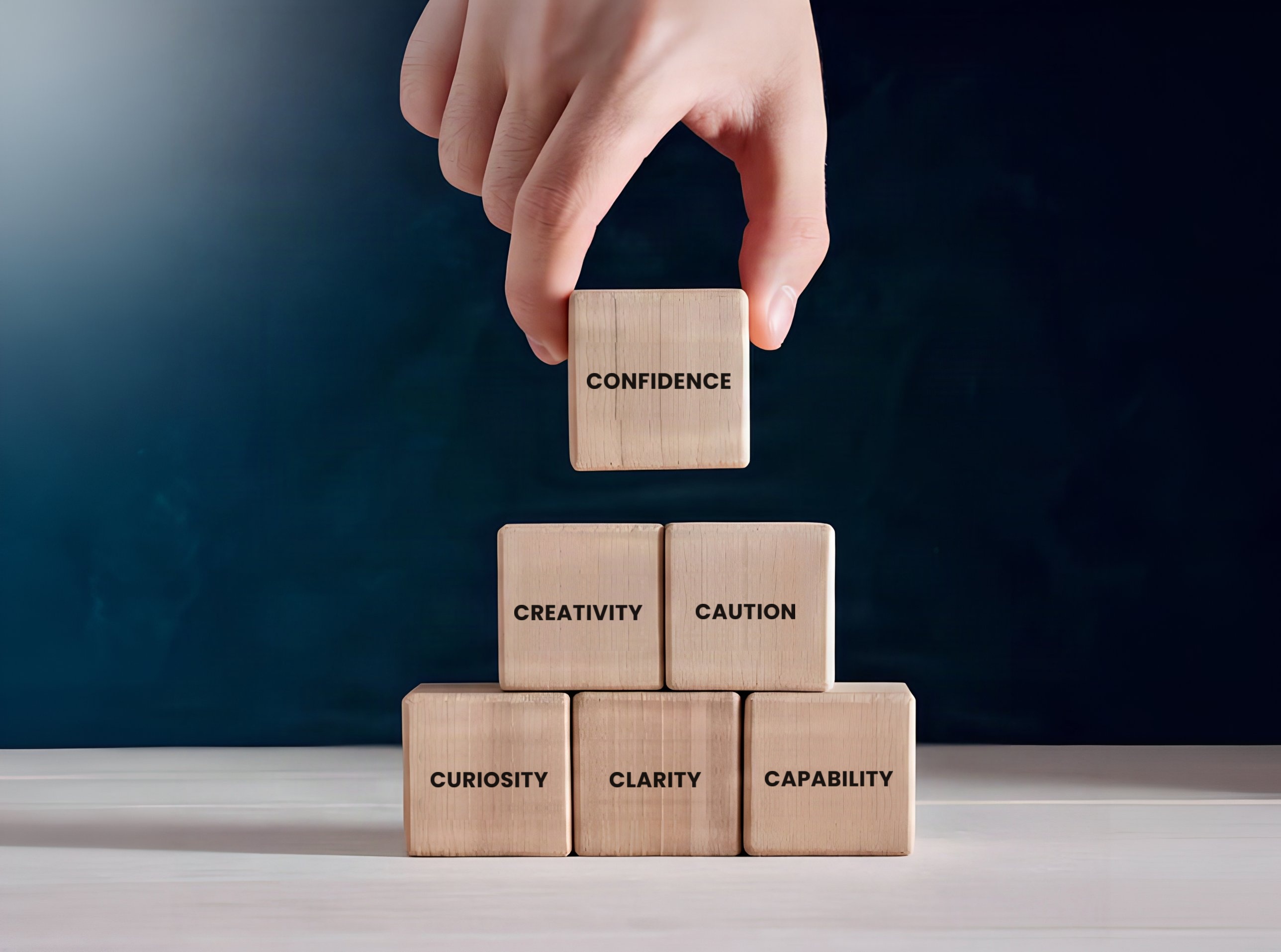
What we offer in return is a route: from curiosity, to capability, to confidence. Underneath it sit six building blocks, the six Cs: curiosity, clarity, capability, creativity, caution and confidence. Clarity about what you're trying to do, creativity in how you go about it, and caution about where AI can go wrong are what turn curiosity into confidence that lasts.
You come with a question. You leave having built something, with people who were working it out alongside you, and with the confidence to try the next thing on your own.
That route looks different depending on where you stand.
And we're learning what Agent Build Club needs to be from the people in it: academics, students, graduates looking for work, the HR teams looking for talent, and the AI innovators pushing the boundaries.
I should say who I am to be starting this.
I began at art college, and I've never stopped thinking of myself as a maker. I went on to train as an architect at the Bartlett and practised in London, including at Edward Cullinan Architects, designing university buildings. That's where my lasting interest in professional practice began: how a profession holds its standards, how people learn to meet them, and who gets let in.
Practice is built mainly on a business model of client work. I soon realised I wanted to be free to invent and make new things as the ideas came to me, not as clients asked for them. So I left practice for research and development, and went back to university.
I was drawn to a course in generative design at the University of East London, perhaps 20 years ahead of its time. It gave me room to explore. In parallel, to support my research, I worked at UEL's School of Architecture in three roles, all on the bridge between academia and the working world. As senior lecturer in professional practice, I taught students at university. As the professional studies adviser, I supported students on their year out in practice. And for six years, as the school's employability adviser, I helped students find work, mostly first-generation students, many from communities the profession rarely sees. I saw how much harder the door is to open without the networks and insider knowledge others take for granted.
Along the way I spent more than a decade as a tech founder. My company, Stickyworld, built software that helped public bodies consult people on decisions that affected them. The thread through all of it has been democratic design: more people should have a say in what shapes their lives.
Most recently, I spent just over four years as an innovation adviser at the University of Surrey. After years of inventing things myself, my job was supporting other innovators. I saw a very wide range of innovations, across many industries and professions, and kept asking the same question: when this lands, what happens to the people whose work it changes?
Put together, that career has shown me three patterns, and AI makes each of them more urgent.
The first is that universities and businesses usually learn about a new technology separately, and compare notes late, if at all. By then the university is teaching towards a version of work that has already changed, and employers are describing a skills gap they didn't help to close. The most useful learning happens on the bridge between the two, when someone takes the trouble to build it.
The second is that new technology tends to arrive as tool training. Someone shows you which buttons to press. That knowledge has a short life. What lasts is learned in the company of other people: what the tool is for in your line of work, and how you'd know when it has got something wrong.
The third is the one that stayed with me. The people most affected by a change in how work is done are rarely the ones deciding how it's introduced, and change reaches first those who already have access. Students, early-career staff and small firms tend to receive the change. They don't get to shape it.
Agent Build Club is my answer to those three patterns. It puts universities, practice and learners in the same room, so they learn together instead of comparing notes late. It teaches judgement, with other people and across tools, instead of which buttons to press. And it opens the door to the people change usually reaches last, so they get a say in it.
That last one matters most to me. When work changes, the people affected shouldn't carry the cost alone, and they should have a say in what comes next. The labour movement calls this a just transition. The International Monetary Fund has warned that AI could widen inequality if its gains go mainly to those already ahead. What a just transition means for AI is still an open question, and I explore it in What would a just transition to the future of work actually involve? A learning community that widens who gets to learn, starting in universities and reaching further over time, is one practical way to push back.
In practice, that means spaces to experiment, play and learn from each other. People bring a real problem, work on it in mixed groups, and share what happened, including what didn't work. The conversations and the hands-on experimenting happen together, at every level of capability, from first-timers to people who build agents every day.
Three principles shape how we do it.
We're starting with universities, because that's where students, researchers and employers already meet. But we can't build this alone, and we don't want to. So we're reaching out to everyone who has something to offer:
It's a broad church, on purpose. If you have something to offer, this is an open invitation to partner, to collaborate, and to help build a place where these conversations happen alongside hands-on experimenting.
We're also building our own tools with AI to run the business, and we'll write up what we learn as Field Notes.
I should be plain about where we are. We're early. We don't yet have years of results of our own to point to, and I'd rather say so than imply otherwise. That's why we work in public: we try things with the people involved and write up what happened, including what didn't work. We'll sometimes be wrong in public. I think that's a fair price for being believed when something does work.
We hold ourselves to the values universities hold at their best. We're open in how we work, and rigorous about evidence. And we aim to be useful to the place we're in, not only to the people already ahead.
If any of this sounds like you, here's how to start.
Nobody trained for this future. The good news is that nobody has to learn it alone.
Michael